Picking the right Wood for your pergola sounds simple—until you realize how many choices there are and how much our Utah climate matters. If you live in or around Salt Lake City, you’re dealing with high-elevation sun, dry air, cold snaps, and the occasional heavy spring snow. The good news? With the right species, finish, and build details, your pergola will look great and stay solid for years. This guide from Utah Pergola Company is written for homeowners who want shade that lasts, style that fits their home, and maintenance they can actually keep up with.
Contents
- 1 First things first: what matters in Salt Lake City
- 2 The usual suspects: Cedar, Redwood, pine, and fir
- 3 Tougher players: hardwoods and modified woods
- 4 Engineered options that still count as wood
- 5 Finishes that fight Utah sun
- 6 Hardware and joinery: the unglamorous heroes
- 7 Style and grain: matching your home
- 8 Cost and care: a quick snapshot
- 9 Quick decision paths: what fits your life?
- 10 Frequently asked—yet rarely answered
- 11 Why homeowners trust Utah Pergola Company
- 12 Ready to sketch your shade?
First things first: what matters in Salt Lake City
Let me explain why local conditions steer smart choices. At 4,200 feet, the sun here is no joke. UV exposure breaks down wood fibers and fades color faster. Our air is dry most of the year, which helps against rot but can cause boards to check if the wrong species or finish is used. Winter brings freeze-thaw cycles and snow loads, especially for folks up the benches and in Park City. Wind can kick up in the evenings. All of that nudges us toward certain species, smarter finishes, and sturdy hardware.
There’s also the practical stuff. Pergolas usually don’t need a full building permit when they’re freestanding and open, but local rules vary. HOA guidelines can limit height, color, or placement. And if you’re near the foothills, wildfire-aware design—like choosing species and finishes that resist ignition—deserves a quick conversation. We handle those details every week, so you don’t have to stress.
The usual suspects: Cedar, Redwood, pine, and fir
These are the classic choices you’ll see on most Utah patios. They each bring a different mix of cost, durability, weight, and look. Here’s how they hold up on the Wasatch Front.
Western Red Cedar: the crowd-pleaser
Best for: Warm color, natural rot resistance, easy maintenance.
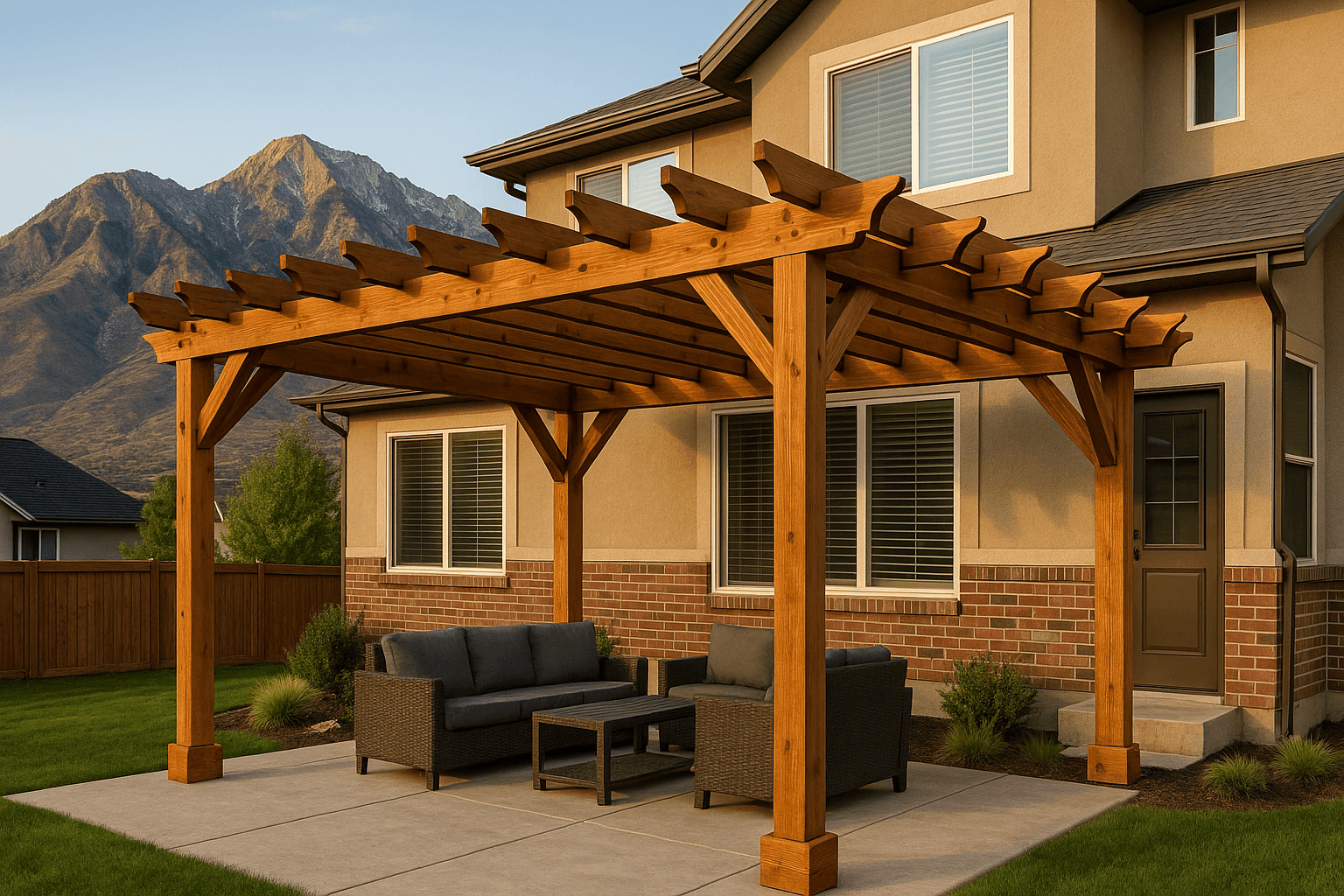
Most homeowners love a cedar pergola for its balance of price, performance, and beauty. Cedar is naturally resistant to rot and insects, which is perfect for a dry, sunny climate. It’s lightweight, smells great, and takes stain well. It will silver out without a tinted finish, which some people love and others don’t. Honestly, cedar checks a lot of boxes without trying too hard.
In Salt Lake City, Western Red Cedar pairs nicely with modern and mountain-contemporary homes. Expect minimal warping if it’s dried and built correctly. Plan for a light maintenance cycle: a gentle wash and a fresh coat of UV-protecting oil every 12–24 months.
Redwood: rich color, similar perks
Best for: Deep color tone and natural durability.
Redwood is like cedar’s cousin with a deeper hue. It has similar natural resistance to decay and insects and behaves well in dry air. It can be a touch pricier and is sometimes harder to source in consistent sizes. The color is gorgeous, especially with a subtle brown-amber tint that amplifies the grain. If your home leans rustic or craftsman, redwood can look right at home.
Pressure-Treated Pine: budget-smart, with caveats
Best for: Cost-conscious builds with solid longevity.
Pressure-treated pine is sturdy, available in large sizes, and friendly on the wallet. The treatment helps against decay, but pine moves more than cedar or redwood. You may see more checking and slight warps over time—Utah’s dry climate speeds that up. It needs regular finishing, too. Want the look of cedar without the price? Stain can get you close, but you’ll still feel the difference in how it ages.
Douglas Fir: strong, stable, and build-ready
Best for: Bigger spans and a clean, structural look.
Doug fir is strong, straight-grained, and widely used in framing. It’s not naturally rot-resistant like cedar, so it needs a solid finish regimen and clean post bases that keep wood off concrete. But if you want a bold, modern pergola with long, straight lines, fir delivers. Think large beams, crisp profiles, and loads of presence. With the right stain and maintenance, it can be a head-turner.
Tougher players: hardwoods and modified woods
Sometimes you want iron-clad durability or a super-sleek look. That’s where tropical hardwoods and modified woods shine—even if they’re a little extra to work with.
Ipe and other tropical hardwoods
Pros: Extreme density, low rot risk, long lifespan. Cons: Cost, weight, special fasteners.
Ipe, Cumaru, and similar species are famous for Decks, and they make killer pergolas too. They laugh at UV and moisture but need pre-drilling, stainless fasteners, and oiling to keep their deep brown color. Leave them bare and they weather to a sleek silver. That can look fantastic with steel accents—very modern mountain.
Thermally modified wood and acetylated wood
Thermally modified ash and acetylated options like Accoya handle Utah’s extremes very well. Heat or acetylation changes the wood’s cell structure, making it more dimensionally stable and rot-resistant without heavy chemicals. It’s lighter than tropical hardwoods, easier to cut, and takes finish beautifully. The cost is higher than cedar but lower than many exotics. If you love straight lines and low movement, this category is a sleeper hit.
Engineered options that still count as wood
Engineered Timber can be a smart move when you want strength and span without massive solid beams.
Glulam beams (glued laminated timber) are laminated layers of wood, bonded for strength and stability. They’re less likely to twist and can bridge longer distances with a slimmer profile. They stain up nicely—think cedar-toned glulam under a steel shade lattice for a clean, architectural feel. We also use laminated cedar posts for reduced movement and better long-term alignment.
Finishes that fight Utah sun
Here’s the thing: finish matters as much as species. High-elevation UV will bleach color fast and can dry out fibers. Rely on tinted, penetrating finishes with UV blockers—thin coats that soak in, rather than thick films that sit on the surface.
- Penetrating oils with UV inhibitors: Products like Penofin, Messmer’s UV Plus, and Armstrong-Clark help cedar, redwood, and fir stay hydrated and protect against sun fade.
- Color matters: Clear finishes look gorgeous on day one, but they fade faster. A light amber or brown tint buys longer UV protection and warmer tone.
- Simple maintenance rhythm: Gentle wash each spring; recoat every 12–24 months depending on sun exposure. West-facing yards often need attention sooner.
- Avoid thick films: Film-forming varnishes can peel in our climate as wood moves. You don’t want flakes on your patio furniture.
If you’re eyeing hardwoods, plan a light oil once or twice a year to retain that deep coffee tone. If silvering is your style, you can ease off. You know what? A soft gray pergola pairs beautifully with native grasses and dark bronze windows.
Hardware and joinery: the unglamorous heroes
A beautiful pergola can still fail if the hardware rusts or the posts wick moisture. We prevent that from day one.
- Post bases: Keep wood off concrete with elevated, powder-coated or stainless bases. It looks clean and stops rot.
- Fasteners and connectors: Stainless or hot-dip galvanized. Brands like Simpson Strong-Tie Outdoor Accents bring the strength—and they look good doing it.
- Hidden joinery options: We can keep lines clean with concealed hardware where the style calls for it. Traditional mortise-and-tenon for a craftsman vibe? Yes, we do that too.
Salt, rain, snowmelt—hardware takes a beating. Spend right here and you won’t have to think about it later.
Style and grain: matching your home
Wood choice isn’t just science—it’s also story. Warm pergola wood tones feel welcoming after a ski day. Cool grays read modern against stucco and steel. Tight, straight grain lends a refined look; knotty patterns feel rustic and relaxed. If your home has black windows and clean lines, cedar or modified wood with a neutral-brown stain can tie everything together. For farmhouse and craftsman, redwood sings.
Beam size changes the mood too. Slimmer members feel light and airy; oversized beams look grounded and bold. We’ll balance scale with span so the structure feels right from the street and from your favorite chair.
Cost and care: a quick snapshot
Costs vary with size, spans, and hardware, but here’s a simple, high-level comparison to help frame the decision. It’s not a quote—just a helpful guide for planning.
| Wood Type | Durability in SLC | Typical Maintenance |
|---|---|---|
| Cedar | High for a softwood; stable, rot-resistant | Wash yearly; recoat 12–24 months |
| Redwood | High; similar to cedar, richer color | Wash yearly; recoat 12–24 months |
| Pressure-Treated Pine | Moderate to high; more movement | Wash yearly; recoat 12 months |
| Douglas Fir | High structurally; needs good finish | Wash yearly; recoat 12–18 months |
| Ipe/Hardwoods | Very high; dense and tough | Oil 12–24 months (or let silver) |
| Modified Wood (Accoya, etc.) | Very high; stable, low movement | Wash yearly; recoat 18–36 months |
Small note: West and south exposures soak up more sun. North-facing yards usually stretch the maintenance schedule.
Quick decision paths: what fits your life?
Different homes, different rhythms. Here are a few simple routes that work well along the Wasatch Front.
- Low-fuss and classic: Cedar with a light UV oil. It’s the sweet spot for most homeowners.
- Budget with backbone: Pressure-treated pine with quality hardware and a warm-brown stain. Expect more touch-ups, but it looks great.
- Modern statement: Douglas fir or modified wood with steel brackets, slim members, and a neutral finish.
- Wow factor, minimal color fade: Ipe frame with steel shade elements. Heavier upfront, lighter long-term.
- Mountain-contemporary blend: Cedar beams, black powder-coated brackets, and a vine-ready lattice for seasonal shade.
Speaking of vines, yes, you can grow them—but plan the structure for weight. Wisteria looks dreamy but gets heavy. Grapes do great here and offer fruit in late summer. We’ll size beams and rafters based on the plants you have in mind.
Frequently asked—yet rarely answered
Will cedar attract pests? Cedar’s natural oils help repel insects. Keep it off the ground and use clean post bases and you’re set.
Can I mix wood and steel? Absolutely. It’s a sharp, modern look—and steel shade slats handle UV better than most woods. We love this combo for city lots and new builds.
How tall should my pergola be? Most land between 8 and 10 feet. Taller feels breezier but may reduce shade angles. We sketch shade patterns for your exact yard and time of day.
Do pergolas need footings below frost? Yes. We set posts or steel columns on concrete footings below the local frost depth so you won’t see heave or tilt later on.
Why homeowners trust Utah Pergola Company
We build custom pergolas all over the Salt Lake Valley—from Bountiful and Sugar House to Draper and South Jordan—and up the hill to Park City. Our crews know how wood behaves here. We mill clean, straight components, specify the right fasteners, and finish for high-altitude sun. We also coordinate with HOAs, check setback rules, and engineer larger spans when needed.
Here’s our approach: we listen first. What do you want to feel under your pergola—cool shade for late lunches, warm filtered light at sunset, or a cozy nook with a fire table? Then we match wood species, finish, and layout to your home and your routine. No guesswork, no cookie-cutter kits that don’t fit your space.
If you’ve felt stuck choosing between beauty, budget, and maintenance, we’ll line it up clearly. A Salt Lake City pergola can do all three—with the right plan.
Ready to sketch your shade?
You’ve got options, and they’re all within reach. Whether you’re leaning toward a warm cedar pergola or a sleek, low-maintenance modified wood frame, we’ll help you choose the right path for your yard, your sun exposure, and your style.
Call Utah Pergola Company at 801-784-6082 or tap below to Request a Free Quote. We’ll bring samples, talk through finishes, and map where the shade will fall on a July afternoon—so you know exactly what you’re getting.