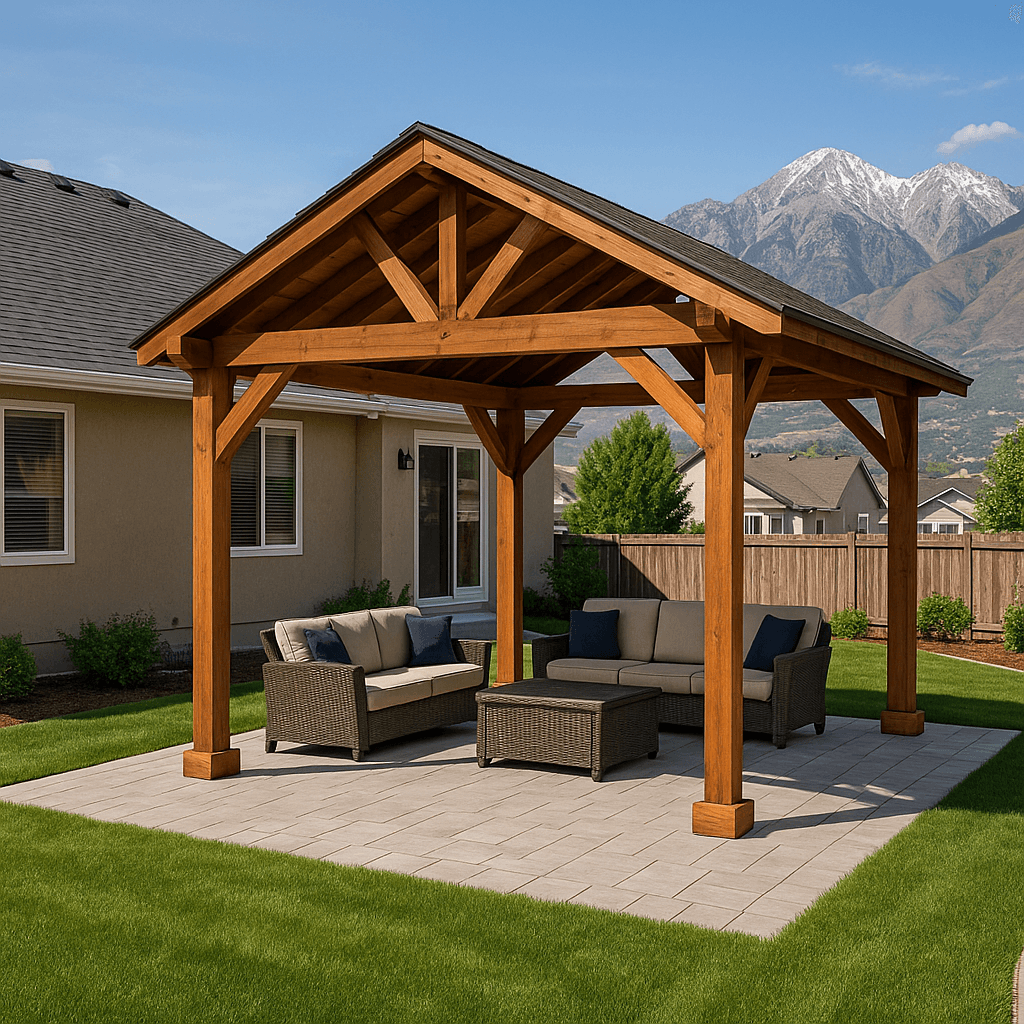
When summer hits the valley and the Wasatch starts glowing that late-gold color, everyone wants the same thing: shade that actually feels good. A backyard pavilion kit gives you that—clean lines, dependable cover, and a spot that changes from breakfast nook to game-day hangout without fuss. It’s DIY-friendly, sure, but it also looks polished, like it’s been there all along. A pavilion isn’t a necessity. Then again, on a July afternoon in Salt Lake City, shade feels pretty essential—especially when it looks this put-together.
Contents
- 1 Why pavilion kits are having a moment in Salt Lake City
- 2 Pavilion or pergola—what fits your life?
- 3 Materials and roof Styles that make sense here
- 4 Sizing, siting, and layout: get the bones right
- 5 What a quality pavilion kit includes
- 6 Tools, skills, and the real weekend timeline
- 7 Common mistakes we see (and how to skip them)
- 8 Foundations and footings for Utah soil
- 9 Style moves: lights, privacy, and four-season comfort
- 10 Budget talk: what a pavilion kit really costs
- 11 Care and maintenance: keep it beautiful
- 12 Shipping, lead times, and what to expect with a kit
- 13 How Utah Pergola Company helps—DIY backup or full-service build
- 14 Ready for shade that looks built-in? Let’s make it happen
Why pavilion kits are having a moment in Salt Lake City
It’s not just a trend. It’s the way our seasons work here. We see blazing summer sun, sudden spring gusts, and powdery snow that sometimes arrives early. A **pavilion** gives you solid cover, so you can grill on hot days and still sit outside when a surprise sprinkle rolls through.
You know what? It also solves a quiet problem—backyards that feel unfinished. With a DIY pavilion kit, your patio becomes a room with a ceiling. That changes how you use the space. Coffee tastes better under a roof with a breeze. Homework gets done. Friends linger.
Here’s the thing: kits are fast. You get pre-cut components, clear plans, and engineered hardware that fits. It’s like building from a recipe instead of guessing at ingredients. For many homeowners, that means a weekend project instead of months of “someday.”
And because this is Salt Lake City, we’ll say the quiet part out loud: neighbors and HOAs notice. A pavilion usually reads tidy and permanent, which sits well with guidelines. Done right, it boosts home value and curb appeal while doing the job—shade—very, very well.
Pavilion or pergola—what fits your life?
We’re Utah Pergola Company, so we love a classic **pergola**. But a pergola and a **pavilion** aren’t trying to do the exact same thing.
Shade coverage: A pavilion gives full shade and rain protection. A pergola gives patterned shade—lovely but not weatherproof.
Ceiling fans and lights: Fans and recessed lighting live happiest under a pavilion roof. Pergolas can handle string lights and small fixtures.
Snow and wind: A properly engineered pavilion roof can handle Utah’s snow zones and valley gusts. Pergolas need careful design for load and louver weight.
If you’re dreaming of a calm, all-weather hangout—somewhere you can host on a surprise rainstorm or keep hot sun off the kids—a pavilion kit is probably your winner. If you want dappled light and climbing vines, pergola it is. We build and support both, and yes, you can combine them for layered style.
Materials and roof Styles that make sense here
A pavilion needs to look right and work hard. These are the most common kit materials you’ll see—and how they behave in Utah’s climate.
| Material | Look & Feel | Care & Durability |
|---|---|---|
| Engineered Wood (Cedar, Douglas Fir) | Warm, timeless; great with mountain-modern homes | Stain every 2–4 years; handles snow well with proper sealing |
| Aluminum | Crisp, modern lines; subtle Colors | Low maintenance; resists rust; ideal near sprinklers |
| Steel or vinyl-clad | Solid stature; clean surfaces | Very sturdy; check powder-coat or cladding quality |
What about the roof? This part matters for snow-load and looks.
Architectural shingles: Traditional, cost-friendly, and easy to match to your home. Good sound control in rain. Needs proper underlayment.
Standing seam metal: Sleek and resilient; sheds snow nicely when pitched. Slightly louder in rain without insulation, but beautiful.
Polycarbonate panels: Let in filtered light while blocking UV. Great for plant lovers; choose thick panels rated for cold snaps.
If you live closer to the benches or get drift-heavy storms, ask us about kits engineered for higher loads. We like a little margin here because Utah storms can get dramatic without warning.
Sizing, siting, and layout: get the bones right
A pavilion can be a throne for your yard—or a weird hat—depending on size and placement. Let me explain.
Think of your largest table, your grill zone, and the walking paths. Add 3–4 feet around seating for comfort. Most back patios do well with a 12×12, 12×16, or 14×20 footprint. If you plan to host often, go a size up; nobody complains about extra elbow room.
A few quick notes we share with Salt Lake City homeowners:
- Sun path: Our afternoon sun hits hard from the west. Rotate the ridge or add privacy screens to block glare.
- Door clearances: Leave space for doors to swing without bumping posts.
- Snow shed: Aim the roof so melting snow drips away from walkways.
- Views: Frame the Wasatch, not the A/C unit. That’s a free design upgrade.
Permits? In Salt Lake City and most nearby cities, anything roofed usually needs a permit and footings. We can provide stamped plans with your kit and handle the paperwork if you want. Honestly, that part’s not glamorous, but it’s worth doing right.
What a quality pavilion kit includes
Not all kits are created equal. A good one feels obvious when you open the crates.
- Engineered plans with clear loads, post spacing, and hardware schedules.
- Pre-cut, labeled components that reduce onsite guesswork.
- Heavy-duty hardware made for exterior use in four seasons.
- Anchoring solutions for slab, deck, or pier footings.
- Roof system with sheathing, flashing, drip edge, and vents as needed.
- Finish choices like stains, powder-coated colors, or fascia details.
- Warranty that actually covers Utah weather, not just mild climates.
If your kit leaves you buying random brackets at the big-box store, it’s not saving time. It’s creating a scavenger hunt.
Tools, skills, and the real weekend timeline
Most **DIY pavilion kits** are within reach for a handy homeowner and a friend or two. A few ladders, good attitudes, and enough snacks make a difference.
- People power: 2–3 adults, 1–2 days for a mid-size kit once footings are set.
- Tools: Impact driver, sockets, level, masonry bit or anchors, circular saw, ladder(s), and a square. A post level is a nice bonus.
- Foundation: If you’re pouring piers, add separate time for digging and cure—don’t rush this part.
Pro tip: Pre-paint or stain wood components before assembly. It speeds things up and gives better coverage, especially at joints. Also, lay out everything on the lawn first. Dry-fitting parts helps you find small surprises while they’re easy to fix.
Common mistakes we see (and how to skip them)
We’ve helped a lot of homeowners rescue almost-done projects. Save yourself that chapter.
- Shallow footings: Utah frost can heave footings. Plan for local frost depth and rebar cages.
- Skipping anchors: Posts need proper connections to resist uplift and sway, not just gravity.
- Incorrect pitch: A flat roof invites puddles. Follow the plan for slope and overhang.
- Random hardware substitutions: Mixed metals corrode faster. Stick to the spec.
- Underestimating wind: We get canyon gusts. Cross-bracing and correct fasteners matter.
- No electrical plan: If you want fans or lights, run conduit and boxes while framing is open.
You’ll notice a theme: small details do big jobs. That’s construction. It’s not fussy; it’s protective.
Foundations and footings for Utah soil
Salt Lake City builds on a mix of clays, sands, and fill. That means footings do the heavy lifting. Most Pavilions need concrete piers that extend below frost depth, with anchors set properly and posts isolated from soil.
A few quick pointers:
- For slabs, use structural anchors designed for your thickness and rebar layout.
- For Decks, attach to beams with rated post bases, not surface-only brackets.
- For ground installs, sonotube piers with rebar, below frost depth, are the usual standard.
Drainage matters too. Keep soil or mulch a few inches down from base hardware, and grade away from posts. The goal is simple: keep wood dry and hardware breathing.
Style moves: lights, privacy, and four-season comfort
This is where the pavilion stops being “a structure” and becomes your favorite room.
Add a sleek ceiling fan with a damp rating for summer. Tuck recessed LED lights along the beams for quiet evenings. If you want winter coziness, slim radiant heaters keep the party going even when the air is crisp.
Privacy screens on the west side cut that late-afternoon blast, and they look polished. If you’re near a neighbor’s window, a Timber slat wall gives privacy without closing the pavilion off.
Color? Contrasting trim is having a moment. Think cedar beams with black hardware, or a clay-colored metal roof that nods to the desert hues south of us.
And because we live where the sunsets paint the lake, leave an opening toward the view. It’s a simple choice that pays off every night.
Budget talk: what a pavilion kit really costs
Let’s keep this practical. Prices depend on size, material, and roof system, but here’s a local-friendly snapshot.
- DIY kits: Many quality pavilion kits land in the mid-four figures to low five figures. Add footings and electrical if needed.
- Install add-on: Professional installation adds labor but saves time and avoids rework. For many, it’s worth the peace of mind.
- Custom work: If you want a built-in kitchen, privacy walls, or a complex roof, the budget rises—but so does the “wow.”
One more thing: a well-built outdoor living space tends to recoup value here in the valley. Appraisers and buyers notice covered patios, and they notice when it’s done right.
Care and maintenance: keep it beautiful
Good news—most of this is easy.
- Wood: Rinse dust in spring. Re-stain every 2–4 years with a UV-blocking finish. Watch the base of posts after storms.
- Metal: Hose off mineral deposits from sprinklers. Check touch-up paint on small scratches to protect the coating.
- Roof: Keep gutters (if included) clear of leaves. In heavy storms, a gentle roof rake is better than a shovel.
Salt and de-icers can be harsh on metal bases. Sweep, don’t pile, near your posts. Little habits make structures last a long time in Utah.
Shipping, lead times, and what to expect with a kit
Most **DIY pavilion** kits arrive on pallets with labeled components and a packing list. Depending on the season, lead times can run a few weeks to a couple of months—spring fills fast in the Salt Lake area. If you’re timing around a graduation party or Pioneer Day barbecue, give yourself a buffer.
We can stage delivery with footing work, and we’ll go through the plans with you before you start. That five-minute walkthrough avoids a lot of “Wait, where does this go?” moments.
How Utah Pergola Company helps—DIY backup or full-service build
Maybe you’re a weekend builder who wants a sharp-looking kit. Maybe you’d rather have a crew handle it while you plan the first cookout. We’re good either way.
- Design consult: We’ll help size and place the pavilion for shade, views, and roof pitch.
- Engineered plans and permits: Available for Salt Lake City and nearby municipalities.
- DIY support: We supply the kit, answer questions, and can send a tech if you hit a snag.
- Professional installation: Our team handles footings, build, electrical, and finish. Clean job sites, respectful crews—our thing.
We build pavilions all over the Wasatch Front and know the quirks of this climate. If your yard slopes, if the wind howls down your street, or if the HOA has rules, we’ve done this dance before.
Ready for shade that looks built-in? Let’s make it happen
If you want a backyard that works as hard as your living room—and looks just as good—a **pavilion kit** is a smart move. It’s simple, durable, and a pleasure to use. We can help you DIY it with confidence, or handle the whole project.
Call us at 801-784-6082 and tell us what you’re picturing. Or tap the button below and we’ll get you pricing, timelines, and options that fit your home and neighborhood.
We’re Utah Pergola Company—local, friendly, and serious about great shade.