Summer along the Wasatch Front hits different. One day it’s bluebird skies and dry heat; the next, a quick mountain gust blows in and you’re grabbing for napkins. That’s why the right shade structure matters—at home, at a café patio, at a community pool, even on a school campus. Today we’re talking the crowd-pleasers: the top commercial Gazebo designs we’re building and seeing all over Salt Lake City. And here’s the twist. While these are built tough for public spaces, they’re fantastic inspiration for homeowners who want the same comfort, clean look, and low maintenance in their own backyard. You want shade without fuss? You’re in the right place.
Contents
- 1 Why commercial gazebo design matters in Salt Lake City
- 2 Classic pavilion gazebos that always work
- 3 Modern metal gazebos: clean lines, low fuss
- 4 Hybrid wood-and-metal: warmth meets muscle
- 5 Shade for hospitality, retail, and community spaces
- 6 Smart upgrades people actually use
- 7 Materials that survive Utah’s four seasons
- 8 Size, span, and permits—quick reality check
- 9 Borrowing from commercial: what works at home
- 10 How Utah Pergola Company builds it
- 11 Pricing snapshot for planning
- 12 Quick FAQs
- 13 Top commercial gazebo Styles we recommend right now
- 14 Ready to shade your space?
Why commercial gazebo design matters in Salt Lake City
Salt Lake City brings four honest seasons. High UV at altitude. Occasional canyon winds. Snow that arrives late and heavy, then melts fast. So a gazebo in Salt Lake City needs more than pretty bones. It needs structure, drainage, and finishes that shrug off sun, snow, and sudden showers. For businesses, that means consistent guest comfort and fewer mid-season repairs. For homeowners, it means more weekends under shade and less ladder time with a paintbrush.
Good commercial design also balances utility with style. A park pavilion that feels welcoming. A restaurant roofline that’s modern but not cold. A community courtyard that looks nice from every angle—not just the front. And yes, code matters. Wind exposure, snow load, setbacks. It sounds formal, but we bake it into the design so you never feel it.
Classic pavilion gazebos that always work
There’s something timeless about a pavilion. Clean posts, a strong roof, a space that says “sit and stay awhile.” You can dress it up or keep it simple. Either way, it just works.
Square and rectangular Pavilions
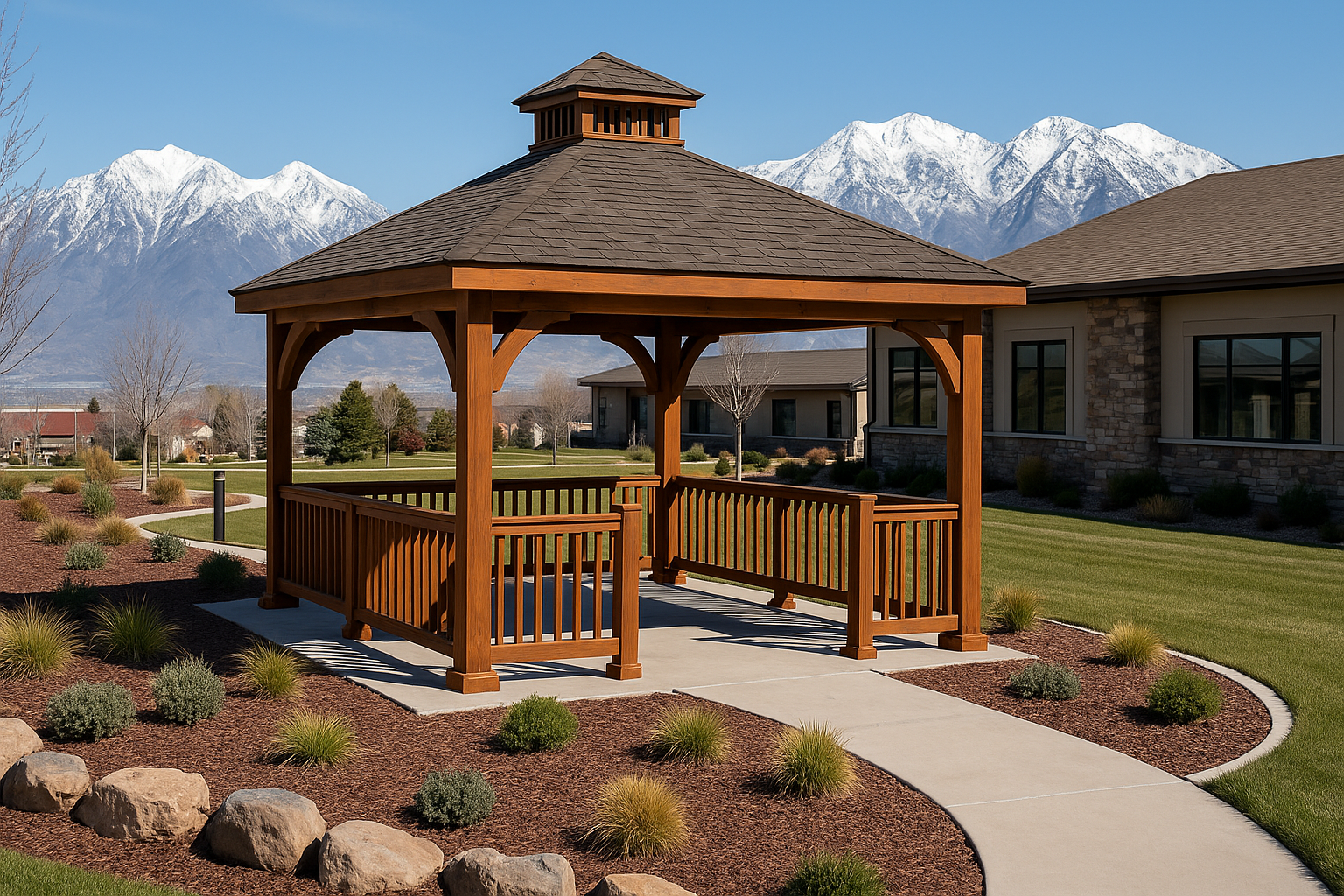
These are the daily drivers for parks, HOA pools, and event lawns. They offer clear spans, solid coverage, and great furniture flexibility. Popular structures use laminated beams or powder-coated steel posts with a standing-seam metal roof. That roof isn’t just a pretty top hat—it sheds snow, handles wind, and stays quiet in a quick rainburst.
For smaller backyards in Sugar House or Millcreek, a 12×16 or 14×20 footprint feels generous without stealing the yard. For commercial patios, 20×30 and up help you seat more guests without crowding.
Octagonal and bandstand gazebos
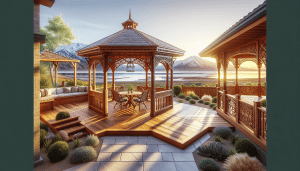
The classic park favorite. Think wedding photos, summer concerts, and farmers market shade. These can be done in Cedar with a cupola, or in low-maintenance aluminum with a Wood-look finish that fools the eye. The geometry breathes; traffic flows from every side, which is perfect for events and community spaces.
- Strong spans: Clear sightlines for seating, performers, or service counters.
- Snow-smart roofs: Pitch and panels that shed what the mountains send down.
- Lighting ready: Conduit and concealed wiring for safe, clean installs.
Modern metal gazebos: clean lines, low fuss
If you want a crisp, contemporary look with almost no upkeep, metal earns its keep. Aluminum gazebo frames with a durable powder coat do great at our altitude. Galvanized steel posts carry weight with quiet confidence. And yes, you can still make it warm with wood soffits or accent slats.
Louvered roof gazebos
Also called a louvered roof or “bioclimatic” roof, this system tilts open for air and closes tight when a passing storm shows up. We add a gutter-and-downspout system at the beam, so water disappears fast. In summer, angled louvers bounce harsh sun while keeping air moving. In winter, you can pitch them to sweep light onto a patio for passive warmth—handy on bluebird ski days when you still crave sun.
Cantilever and free-span pavilions
These feel like magic. Fewer posts. More view. They’re superb for sidewalk seating, valet zones, and play areas where you don’t want center columns. Engineering is key here—we size steel beams for Utah loads, then tuck in lighting and heaters so everything looks intentional, not bolted on.
Hybrid wood-and-metal: warmth meets muscle
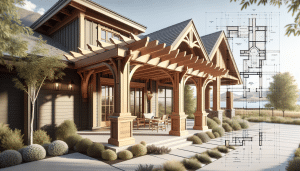
Sometimes you want both: the warmth of wood and the toughness of metal. We pair thermally modified ash or cedar purlins with steel posts and hidden brackets. It’s a handsome contrast and a smart one. Wood where people touch and see. Metal where weather hits hardest.
We prefinish with UV-stable oils in toasty browns or clean grays, then route in channels for LEDs. The effect at dusk? Soft, even light—no harsh hot spots, no bargain-bulb glare. It’s hospitality-grade finish in a backyard-friendly package.
Shade for hospitality, retail, and community spaces
Restaurants on 9th and 9th want walk-up charm. Breweries around Granary live for that indoor-outdoor vibe. Libraries and schools need durable shade that looks welcoming, not institutional. We tune design to use, because the crowd changes the load.
For patios that serve year-round, we like metal roofs with heaters and retractable screens. That combo keeps guests comfortable through shoulder seasons and during a light snow—very “Salt Lake chic.” For community parks, we’ll specify anti-graffiti powder coats and concealed fasteners. For retail entries, slimmer posts protect sightlines to signage and storefronts.
| Design type | Best for | Standout features |
|---|---|---|
| Modern metal pavilion | Restaurants, retail patios | Slim posts, hidden gutters, heaters, clean lines |
| Louvered roof gazebo | Hotels, rooftop lounges, backyards | Tilt control, rain-tight closure, year-round use |
| Classic Timber pavilion | Parks, HOA pools, home entertaining | Warm look, strong spans, accessory-friendly |
Smart upgrades people actually use
Fancy is fun. Useful is better. Here are add-ons we see folks loving month after month in Utah shade structures.
- Motorized screens: Block wind or bugs with a button press; open things back up in seconds.
- Integrated heaters: Slim radiant units keep patios toasty without blasting air.
- Ceiling fans: Low-speed, big-diameter fans move air quietly—even in high ceilings.
- LED downlights and strip lights: Warm temperatures, dimmable, tucked into beams.
- Audio prewire: Discreet speakers mean better sound and fewer complaints from neighbors.
- Drainage and snow sensors: Louvers that close automatically when a storm rolls in.
- Solar support: Where it pencils out, panels can power lighting and fans.
You know what? Bigger upgrades don’t always feel bigger. Good wiring, quiet heaters, and tidy gutters make a space feel polished in ways guests notice—even if they can’t point to why.
Materials that survive Utah’s four seasons
Materials set the tone, but they also set your maintenance list. Here’s the simple version we share with clients shopping for a commercial gazebo in Salt Lake City or a super-durable backyard hangout.
Aluminum: Light, rust-free, and great with powder coat. Minimal upkeep—just rinse and a soft wash. We like it for louvers and trim where precise movement matters.
Galvanized steel: Strong and stable on long spans. We spec thicker-gauge posts for wind and snow. Finish with a top-notch powder coat and you’re set for years.
Thermally modified wood: Real wood, heat-treated to be more stable. Takes stain beautifully. Less movement means cleaner lines over time, even through freeze-thaw.
Roofing: Standing-seam metal for snow-shedding calm. Tongue-and-groove wood soffits for warmth underneath. High-quality polycarbonate in some cases—great light without full sun; we choose UV-stabilized panels that stay clear longer.
Maintenance reality check: metals want quick seasonal rinses; wood wants a refresh coat every couple of years. That’s not a burden if you plan it—honestly, it’s a weekend afternoon with a cold drink nearby.
Size, span, and permits—quick reality check
Salt Lake City has straightforward rules, but details vary by neighborhood, elevation, and lot lines. Setbacks and height limits matter. Permanent roofs usually need a permit; big spans may need an engineer’s stamp. Snow loads and wind exposure get factored into beam sizes and connectors.
Here’s the thing: not all shade counts the same. A small pergola might slide through with a simple review; a roofed pavilion usually wants plans. We work with local officials every week, so we’ll guide you through it—no guesswork, no surprises.
Borrowing from commercial: what works at home
Want the chill of a hotel patio in your own yard? Use restaurant-grade features in a scaled-down way.
- Metal frames, wood accents: Low upkeep with a warm look you’ll love at night.
- Rain management: Built-in gutters mean couches and grills stay dry and ready.
- Real lighting design: Layered light—task, ambient, and a little sparkle—beats a single bright bulb.
- Screen options: Keep views open most days; block wind when a canyon breeze sneaks in.
It sounds fancy, but it’s simple. Durable materials now mean fewer fix-it chores later. And yes, it helps resale. Buyers notice a backyard that actually works nine months a year.
How Utah Pergola Company builds it
We’re locals, and we build for local weather. Our process keeps you looped in without drowning you in details.
- Site visit and concept: We listen, measure, and sketch ideas that fit your space and code.
- Design and pricing: 3D renderings, material samples, and a clear number. No hand-waving.
- Engineering and permits: Paperwork handled. We coordinate with Salt Lake City staff.
- Build and finish: Clean work, respectful crews, tidy site at day’s end.
- Walkthrough and support: We test everything and explain care in plain language.
We install across the valley and up the benches. And if you’ve got a rooftop or tight alley access, we’ve probably solved that puzzle before.
Pricing snapshot for planning
Every project is different, but ballparks help. These ranges reflect typical builds in the Salt Lake area and include structure, finish, and standard lighting. Add-ons like heaters, screens, or complex footings affect totals.
| Design | Typical size range | Ballpark investment |
|---|---|---|
| Timber or steel pavilion | 12×16 to 20×30 | $12k–$55k+ |
| Louvered roof gazebo | 12×12 to 18×24 | $18k–$65k+ |
| Hybrid wood-metal pavilion | 14×20 to 24×30 | $20k–$80k+ |
If you’re a restaurant or venue planning multiple bays or large spans, totals climb with steel, footings, and utilities. Homeowners usually sit toward the lower half of each range—unless you go big on features, which we’re happy to help you plan smart.
Quick FAQs
Do louvered roofs leak? Quality systems close tight and route water to hidden gutters. In a sideways blizzard, you may see mist at edges, but furniture stays dry under normal storms.
How do you handle snow? We design for local roof snow loads and add snow-sensor controls on louvered systems so they close before accumulation. Pitched metal roofs shed fast once the sun peeks out.
What about wind? We anchor posts to engineered footings and size beams for our exposure. Screens retract during strong winds to protect the fabric.
Can you match my home’s look? Absolutely. We color-match powder coat, stain wood to your palette, and line up roof profiles with your house or building.
Top commercial gazebo Styles we recommend right now
If you’re skimming, here’s the short list that’s winning in Utah—at cafes, parks, and backyards alike.
- Standing-seam metal pavilion: Strong, quiet, classic. Add heaters and fans for year-round chill.
- Louvered roof with screens: Weather control on demand; great for hospitality and home entertaining.
- Hybrid steel-and-wood: Warm, modern, and surprisingly low upkeep with the right finish.
- Octagonal park gazebo: Iconic and welcoming—perfect for community spaces and wedding photos.
Different looks, same idea: shade that lasts and space that feels good.
Ready to shade your space?
Whether you’re a homeowner planning a backyard hangout or a business building a patio that pays for itself, Utah Pergola Company makes it smooth. We’ll bring samples, map the sun, and show you what fits your site and your budget—no pressure, just clear choices.
Call us today at 801-784-6082 or hit Request a Free Quote. Let’s build shade that feels right on day one and still looks sharp after many Utah seasons.