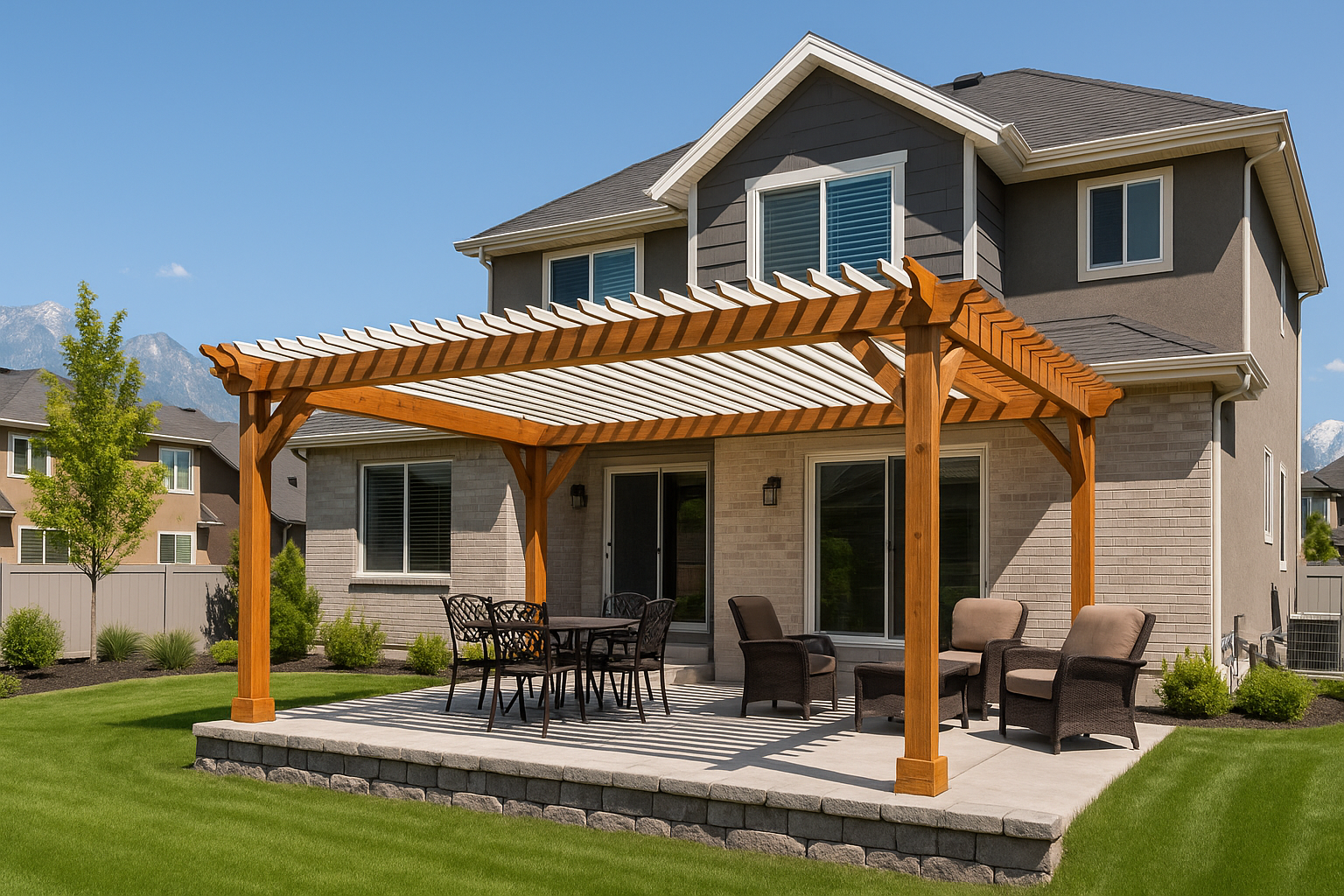
Picture your backyard on a warm Salt Lake afternoon: bright sun, mountain air, a cold drink sweating on the table—yet you’re hunting for shade. A pergola roof turns that squint-and-scatter moment into a soft, comfortable pause. You can read. You can grill. You can actually stay outside. At Utah Pergola Company, we design and build shade structures that look great and work hard—through July heat and January snow. Let me explain how a well-built pergola roof can change the way you use your yard, and how we tailor it for homes across the Wasatch Front.
Contents
- 1 Why a Pergola Roof Changes How You Use Your Yard
- 2 Pergola Roof Styles That Work in Salt Lake City
- 3 Materials: What Holds Up in Utah’s Climate
- 4 Snow, Sun, and Wind: Building for the Wasatch
- 5 Smart Add-Ons That Make It Next-Level
- 6 Sizing, Placement, and Shade Angles
- 7 Real Numbers: Budget Ranges in SLC
- 8 A Simple Path from Idea to Shade
- 9 Quick Questions We Hear All the Time
- 10 Why Utah Pergola Company
- 11 Ready to Bring the Shade Home?
Why a Pergola Roof Changes How You Use Your Yard
A pergola roof does more than throw shade. It makes your outdoor space feel like an actual room. You get protection from high-altitude sun, a little shelter from light rain, and a place that stays cool enough to relax. With the right design, you’ll see less glare, more privacy, and—this is a big one—more evenings spent outside together.
Here’s the thing: Utah’s UV is no joke. Our elevation means stronger rays. A shade structure filters that light, keeps furniture from fading, and helps your skin, too. Add a subtle breeze under the roof, and even a hot day becomes usable. You know what? That small slice of comfort adds up. It nudges you outside for breakfast, for a quick call, for a few quiet minutes after work.
Looks matter as well. A well-proportioned pergola gives your home a steady, finished vibe, like trim on a great suit. It frames the patio, ties in landscape beds, and bumps curb appeal. Many Salt Lake homeowners tell us their new pergola becomes the favorite “room” in the house—technically outside, emotionally central.
Pergola Roof Styles That Work in Salt Lake City
We build several types of pergola roofs in Salt Lake City. Some are adjustable, some are fixed, and each has strengths. The right pick depends on how you like to spend your time and what your yard throws at you.
Louvered pergola roofs
Think of slim, interlocking blades—louvers—that tilt to control sun and rain. Motorized systems (with a remote or phone app) shift from open sky to full shade in seconds. When closed, they channel water to built-in gutters. This is the most flexible choice for four-season use and changing light through the day.
On the west bench, where late-day sun hits hard, louvers are game changers. Want light in the morning, heavy shade after work, and protection during a pop-up shower? Done. A louvered pergola plays nice with Utah’s moody weather.
Fixed slats with shade canopy
Classic slatted beams with a tensioned canopy or fabric shade add a softer look. Slide the fabric out when you want sun, pull it back for shade. It’s simple, good-looking, and budget-friendly. If you want a garden-forward vibe with vines or hanging baskets, this setup is lovely.
Polycarbonate panel roofs
Clear or tinted polycarbonate lets light through but blocks UV, and sheds snow well. It’s great if you want brightness without the burn. We use high-quality panels that resist yellowing and hail. For hot patios that still need a little glow, this is a smart, modern choice.
Insulated aluminum panels (Patio Cover style)
Technically more “patio cover” than pergola, insulated panels bring deep shade, less heat gain, and solid weather protection. They’re quiet in the rain and pair well with fans and heaters. If you host year-round or love steady shade, they’re tough to beat.
Materials: What Holds Up in Utah’s Climate
Salt Lake’s high sun, dry air, and winter snow call for materials that last. We build in powder-coated aluminum, Wood, and vinyl. Each has a distinct look, feel, and care routine.
| Material | Look + Upkeep | Good For |
|---|---|---|
| Aluminum | Clean lines, lots of Colors; powder coat resists UV and rust; low maintenance | Modern homes, louvered roofs, high-sun patios, long spans |
| Wood (Cedar/Redwood/Thermally Modified) | Warm, natural grain; needs stain or oil; ages beautifully if cared for | Craftsman or traditional homes, garden spaces, custom millwork |
| Vinyl | Bright, clean look; very low upkeep; lighter structural capacity | Budget-conscious builds, simple slatted roofs |
Aluminum is our go-to for motorized pergola roofs and homes with strong winds across the valley. Wood brings texture that pairs well with stone, brick, and lush planting. Vinyl keeps costs and maintenance down, which some families love. We help you match material to style, sun, snow, and budget—no guesswork.
Snow, Sun, and Wind: Building for the Wasatch
We design for Utah loads—period. Pergolas aren’t full-scale buildings, but they still face snow, wind, and bright UV. Our team sizes beams and posts for your neighborhood’s wind exposure and snow load. On the east bench? You may see heavier storms. In Daybreak or Lehi? Expect open-area gusts. We adjust spans, footings, and hardware so your pergola roof stays stout.
Snow is a big topic. Fixed roofs need the right pitch and support. Louvered systems, when closed, channel meltwater through integrated gutters; when open, they shed accumulation more easily. We plan drainage to keep water moving away from your foundation. And yes, we handle permits and engineering where required. You shouldn’t have to wrangle city plans or HOA sheets on your own.
Anchoring matters, too. We use concrete footings sized for local frost depth, proper post bases to prevent rot on wood, and hidden steel where needed to resist uplift. It’s not flashy, but it’s what keeps everything square after a big winter or a spring microburst.
Smart Add-Ons That Make It Next-Level
Shade is step one. Comfort is the full picture. Thoughtful add-ons make a backyard pergola feel tailored to your life.
- Lighting that flatters String lights are cute; dimmable, warm LED downlights are magic. We hide wiring for a clean ceiling and add controls you’ll actually use.
- Ceiling fans and heaters A quiet fan turns July evenings into a breeze. Discreet electric heaters extend patio season into November without a giant heater tower.
- Privacy screens and side shades Keep neighbors’ views out and late-day sun at bay. Motorized screens roll down when you need them, disappear when you don’t.
- Gutters and rain chains Direct water to a dry well or garden bed. Little details, big difference.
- Planter boxes and trellises Train hops, grapes, or clematis to crawl and soften the structure. It’s Utah—plants love a little shade, too.
- Audio and smart controls Discreet speakers, app-driven louvers, and timed lights. Easy on, easy off.
We’ve also tucked pergolas around outdoor kitchens, spas, and pizza ovens. If you love to grill even when it snows, we’ll plan safe clearances and ventilation. It’s all buildable with the right layout.
Sizing, Placement, and Shade Angles
Not all patios behave the same. A good pergola sits where you actually live outside—not blocking paths, not crowding doors, and angled to shade when the sun is worst. In Salt Lake, that’s usually afternoon and early evening. West-facing yards take the brunt from 2 to 7 p.m., so we often orient slats or louvers to cut that light first.
We look at furniture dimensions, too. Count chairs, mark walkways, and leave room to slide barstools back. Sounds basic, but it’s easy to miss. If the door swings out, we measure its arc. If your eaves are low, we step the pergola roof to clear gutters cleanly. A small contradiction you’ll hear from us: build it big enough to move freely, but not so big it swallows the yard. We’ll show you a sweet spot.
Technical bits in plain English:
- Height Most pergolas land between 8 and 10 feet. Taller feels airy but needs more beef in posts and beams.
- Shade density Slat spacing and louver angle control light. Tighter spacing = denser shade without feeling dark.
- Water flow Fixed roofs need a gentle pitch for drainage. Louvered systems manage water internally; we plan downspouts that don’t splash walkways.
And yes, we sketch shade angles for summer vs. winter sun. It’s a quick modeling exercise that saves a lot of “I wish we’d turned it five degrees.”
Real Numbers: Budget Ranges in SLC
Every yard, every home, every wish list—different. Still, ballpark ranges help. These are typical for the Salt Lake area and vary with size, features, and site work.
- Classic slatted pergola (wood or vinyl) Often from the high $5,000s to the mid-teens for mid-size builds with quality posts, beams, and stain or paint.
- Aluminum pergola with fabric canopy Usually in the $9,000–$18,000 range, depending on spans, colors, and canopy system.
- Polycarbonate or insulated roof panels Roughly $12,000–$25,000 and up, driven by panel type, lighting, and drainage.
- Motorized louvered pergola Commonly $18,000–$40,000+, influenced by size, wind/snow engineering, integrated lights, heaters, and screens.
We keep pricing transparent and line-itemed. If you’ve been comparing big-box kits to custom builds, we’ll walk you through the differences: lifespan, warranty, finish quality, and code compliance. No pressure, no surprises.
A Simple Path from Idea to Shade
Our process keeps things easy and predictable, even with permits or HOA reviews in the mix.
- Conversation You tell us how you want to use the space. Morning coffee? Family dinners? A shady landing spot by the pool?
- On-site visit We measure, check sun angles, and study wind patterns and access for materials.
- Design + quote Drawings you can picture and a clear, written estimate. Need two versions? We’ll show you both.
- Permits + HOA We handle paperwork, engineering sign-offs, and submittals when they’re needed.
- Build Clean site work, solid footings, careful finishes. We protect landscaping and keep you updated.
- Final walkthrough We test moving parts, set dimmers, and share simple care tips.
From there, your job is the fun part—use the space. Host a birthday. Read that book. Watch a storm slide over the Oquirrhs while you stay dry beneath the pergola roof.
Quick Questions We Hear All the Time
We keep answers short here, and go deeper when we meet.
- Can my pergola handle snow? Yes. We design for local snow loads and recommend styles that match your microclimate.
- Will the color fade? Powder-coated aluminum pergolas hold color very well. For wood, we pick stains and finishes made for high-UV regions.
- Do you run electrical? Absolutely—fans, lights, outlets, heaters—done to code and tidily hidden.
- How long does it take? Most projects run two to six weeks from permits to final install, depending on complexity and season.
- Do you service my area? We cover most of the Salt Lake Valley and surrounding communities along the Wasatch Front.
Why Utah Pergola Company
We’re local. Our team lives here, builds here, and knows how Salt Lake weather behaves from Sugar House to South Jordan. We size for wind, plan for sun, and design like we’ll be the ones sitting under the finished structure. That mindset matters.
What you can expect: clear communication, friendly crews, and craftsmanship you can run your hand across. We use quality hardware and finishes—Simpson, GRK, weather-rated wiring—paired with clean details that make a structure feel like part of your home, not an afterthought. And we back our work with solid warranties and support.
Want references? We’ve built pergolas in Salt Lake City neighborhoods old and new. We’re happy to share photos and local addresses you can drive by. Honestly, the work speaks for itself.
Ready to Bring the Shade Home?
If you’re picturing your backyard with a pergola roof—more comfort, more style, more time outside—we’re ready when you are. Call Utah Pergola Company at 801-784-6082, and let’s sketch a plan that fits your home and your life.
Prefer to reach out online? Click below and we’ll follow up fast, usually the same business day. We’ll talk size, style, budget, and timing—no hard sell.
Here’s to cooler summers, brighter mornings, and a backyard that finally gets used the way it should—often.