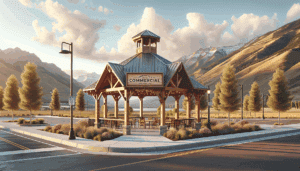
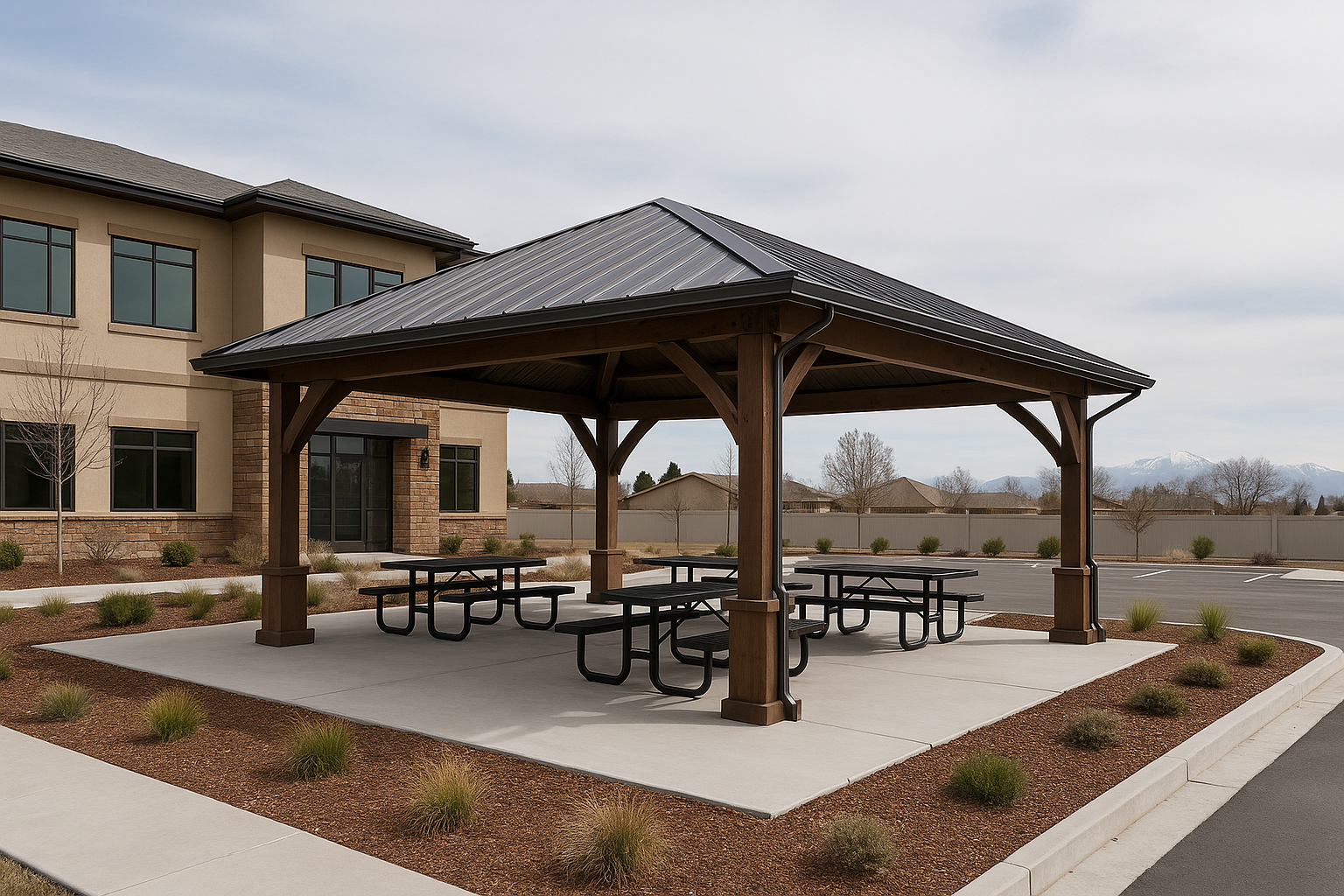
Picture the scene: late afternoon sun over the Wasatch, a soft breeze, and a steady hum of conversation under a handsome roofed space that feels welcoming, cool, and—importantly—on-brand. That’s the quiet power of a commercial pavilion. It does more than cast shade. It signals comfort, extends your square footage, and nudges people to linger just a little longer. If you’re doing business anywhere along the Salt Lake Valley—Downtown, Sugar House, Millcreek, Holladay, Sandy—creating a year-round outdoor zone can be the difference between “nice spot” and “let’s go there again.”
What a Commercial Pavilion Actually Is (and Why It Matters)
Let me explain. A pavilion is a permanent, roofed outdoor structure with open sides. It’s sturdier than a tent and more protective than a pergola. Where a pergola filters sun, a pavilion blocks it—and shrugs off rain and shoulder-season snow. It’s part architecture, part hospitality tool. You’ll see them beside patios, above walkways, near pickup windows, and anchoring courtyards. They grant shade, shelter, and a defined sense of place.
In Salt Lake City, the sun rides high and bright—great for vitamin D, not so great for coffee foam or a tablet screen. A pavilion in Salt Lake City adds usable days and usable hours. Morning meetings run smoother. Lunch crowds don’t bolt. Evening events feel cozy, even when the temps dip. It’s not just comfort; it’s consistency.
Why Salt Lake City Businesses Love Pavilions
Here’s the thing: outdoor seats often tip the scales. A shaded, weather-ready space invites longer visits and repeat trips. For restaurants and breweries, that’s extra tables and a calmer waitlist. For retail, it’s a staging area for pop-ups and demos. For HOAs and apartments, it’s community life with less wear on indoor rooms.
And locally, durability counts. Along the Wasatch Front, we see high-altitude UV, dry heat, spring gusts, and winter snow. A well-built shade structure is engineered for wind and snow loads. That means no guesswork—just a reliable outdoor room that carries your brand through every season.
Use Cases: From Patios to Pickup Windows
Every property has a different rhythm. A pavilion can snap right into yours.
- Restaurants and cafes Extend outdoor dining, create a waiting lounge, or add a private nook for small groups. Add heaters and string lights—now it’s the best seat in the house.
- Breweries and taprooms Think communal tables, cornhole, live music nights. Shade keeps pints cool and guests happy.
- Retail and boutiques Host trunk shows, artisan pop-ups, or seasonal markets. Shade makes browsing feel easy, not rushed.
- Car washes and dealerships Covered detailing bays, delivery handoffs, or shaded EV charging. Clean, clear, and confident.
- Medical and schools Covered pickup zones, outdoor classrooms, vaccination pop-ups—organized and weather-safe.
- HOAs, apartments, and hotels Poolside cabanas, grilling stations, bookable event spaces. Instant community builder.
- Parks and event venues Rentals for birthdays, music nights, and food trucks. It’s a magnet for good gatherings.
You know what? Even a simple coffee kiosk gains a lot from a small pavilion—just a few stools under shade can turn quick-service into “meet-me-there.”
Pavilion vs. Pergola vs. Shade Sail: Which Fits?
We build all three. Each has a lane.
| Structure | Weather Protection | Typical Use |
|---|---|---|
| Commercial pavilion (roofed, open sides) | Blocks sun and rain; handles snow with proper engineering | Outdoor dining, pickup areas, event spaces |
| Pergola (open rafters; can add louvers) | Filters sun; light rain only unless louvers are added | Patio ambiance, walkways, garden rooms |
| Shade sail (tensioned fabric) | Strong shade; wind-aware; seasonal in some settings | Playgrounds, courtyards, pop-up areas |
If you want true rain protection and longer seasons, go pavilion. If you want dappled light and an airy feel, pergolas still shine—especially with motorized louvers.
Design Decisions That Move the Needle
Small choices add up fast. A few that matter:
- Size and clearance Think about table layout, ADA paths, and service routes. Extra inches around chairs reduce traffic jams.
- Roof style Gable, hip, or low-slope. Gables feel classic. Low-slope roofs tuck close to buildings and hide gutters nicely.
- Materials Powder-coated aluminum or steel for low maintenance; engineered Wood or stained Cedar for warmth. We match your brand vibe and maintenance budget.
- Snow and wind engineering Wasatch Front projects often target wind speeds in the 115–120 mph range and ground snow loads commonly in the 35–55 psf band, depending on site. We design accordingly.
- Electrical and comforts Infratech or Bromic heaters, dimmable LED downlights, ceiling fans, speakers, and outlets for laptops. These extend usable hours and seasons.
- Roll-down shades and curtains Block low western sun or shoulder-season wind; clear vinyl panels hold warmth without hiding your space.
- Branding touches Discreet signage, color-matched beams, even a custom end-cap. Subtle but memorable.
A quick note on acoustics: a roof gathers sound. Adding soft furnishings, privacy screens, or planters helps keep conversation pleasant. It’s a small tweak with big impact.
Seasonal Strategy on the Wasatch Front
Our climate’s a character all its own. Spring can be gusty; summers are bright; fall hosts every event under the sun; winter brings chill and snow that melts fast on clear days. A smart pavilion rides the curve.
Summer: prioritize UV-rated roofing, airflow with ceiling fans, and shade screens on the west side. Fall: add light blankets and gentle heaters; bookings grow when it feels cozy. Winter: overhead heaters plus clear panels make outdoor seating surprisingly comfortable on sunny days. Spring: easy drainage and a clean gutter system handle sudden storms.
We also schedule builds with the calendar. Want it ready for patio season? Start design and permits now. Your future self will be grateful.
Quick Math: What Extra Shade Can Mean for Revenue
Numbers vary, but a pavilion creates breathing room. Here’s a simple, no-frills example—illustrative only.
- Restaurant scenario Add 6 two-top tables under a pavilion. If your average ticket is 22 dollars per person and you seat each table 2 times at lunch and 3 times at dinner, that’s 12 guests at lunch and 18 at dinner: 30 extra guests daily. That’s about 660 dollars a day. Over a 6-day week, around 3,960 dollars. Your actual results will depend on staffing, hours, and season.
Retail folks see gains differently—events, workshops, maker markets. Even a monthly ticketed evening with local vendors can pay for a chunk of the project across a season. The headline isn’t a guarantee. It’s a prompt: an outdoor room creates chances to earn.
Build Smarter: Permits, Codes, and Snow Loads
We respect the rules so your project sails through. Commercial builds in Salt Lake City typically require permits and inspections. That means stamped drawings, clear setbacks, proper footings, and respect for fire lanes and egress. Wind and snow engineering is non-negotiable—good engineering is what keeps your venue open on busy weekends.
We coordinate with your GC or facilities lead. We’ll handle submittals, material specs, and schedule. And if you’re juggling utility locates, lighting suppliers, or heater vendors, we’ll help wrangle the details so nothing slips through the cracks.
Our Process at Utah Pergola Company
Honestly, this is the fun part. We like walking a site and hearing how your team uses the space. Coffee on the patio at 10 a.m.? Friday night rush at 7? We listen and design around real life.
- Site visit and goals We measure, check slopes and drainage, and talk through daily flow.
- Design and renderings You’ll see scaled drawings or 3D visuals—so you can approve with confidence.
- Engineering and permits We prepare structural details for wind and snow loads and handle submittals.
- Build and coordination Clean install, minimal disruption, clear communication. We schedule around service hours when possible.
- Finish and handoff Lighting aimed right, heaters tested, gutters clear, and a walk-through so you know every switch.
We also share simple care tips. A little seasonal maintenance goes a long way—especially after wind events and before the first snow.
Real-World Inspiration: Quick Ideas You Can Steal
Sometimes a spark helps.
- Microbrew patio in Sugar House Wood-look pavilion, string lights, two Bromic heaters, and roll-down screens on the west side. Cozy from April through October, and even mild winter afternoons.
- Coffee kiosk near 9th & 9th Compact steel pavilion over the pickup lane with a couple of standing rails. Faster lines, happier mornings.
- Apartment courtyard in Millcreek Gable-roof pavilion with fans and a built-in counter for community potlucks and movie nights.
- Auto detail bay in Murray Low-slope roof with integrated lighting—clean looks, comfortable staff, better shine.
- Hotel by the airport Covered shuttle waiting area with LED downlights and wind screens; guests relax, curbside looks polished.
Different settings, same idea: a well-made pavilion becomes the heartbeat of the property.
FAQ: Short Answers You Actually Want
How much does a commercial pavilion cost?
Ballpark ranges vary with size, materials, and engineering. A small 12×16 commercial-grade pavilion might start in the mid five figures. Larger or fully loaded builds with heaters, shades, and lighting can climb from there. We’ll price it straight after a site visit.
What’s the timeline?
Design and permits can take a few weeks. Fabrication and install often span 2–6 weeks, depending on size and complexity. We’ll give you a clear schedule.
Can it handle snow?
Yes—when engineered for local ground snow load and drift conditions. We design for your site, not a generic map.
What about wind?
We follow local wind speed criteria and use proper anchoring, fasteners, and footings. Sound construction is non-negotiable.
Do you add heaters and lights?
All the time. We coordinate power with your electrician or bring ours. Infratech and Bromic are favorites for clean heat and control.
Do I need a permit?
Most commercial pavilions do. We’ll guide you and handle drawings and submittals.
Maintenance?
Minimal—keep gutters clear, check fasteners seasonally, and wipe finishes with mild soap. We’ll share a simple checklist.
Why Utah Pergola Company?
We build structures that look sharp and feel effortless. Our crews are respectful, tidy, and frankly picky—because you see the details every day. We match materials to your maintenance plan, not the other way around. And we keep the conversation going all the way through punch-list and beyond.
We’ve worked across the valley—tight urban patios, slopey back lots, and wind-prone corners that need extra care. That local know-how keeps your project smooth and your space reliable.
Ready To Bring People Outside? Let’s Talk.
If you’re considering a commercial pavilion—for outdoor dining, events, or a smarter shade structure—we’re here to help you map it out and build it right. Call Utah Pergola Company at 801-784-6082. Or tell us what you’re dreaming up and we’ll sketch it with you—no pressure, just clear answers.
Request a Free Quote and turn that underused patch of concrete into the most loved spot on your property.